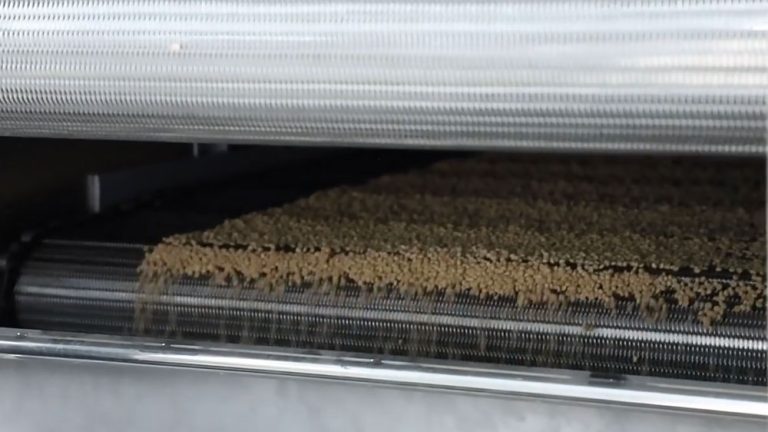
The Precision Challenge in Shrimp & Crustacean Micro-Pellet Production
Modern intensive aquaculture—particularly indoor recirculating aquaculture systems (RAS) and high-density shrimp/crab farming—demands micro-pellet feeds ranging from 0.8mm to 1.5mm in diameter. Because post-larval shrimp and juvenile crustaceans feed by slow nibbling rather than swallowing whole kibbles, micro-pellets must exhibit exceptional water stability (≥12 hours) without disintegrating, swelling prematurely, or leaching water-soluble vitamins into the pond bottom. For feed mills, extruding micro-pellets presents extreme engineering barriers: micro-hole die blockages, pressure surges, thermal degradation of delicate marine proteins, and uneven cutter sizing.
Key Takeaways / TL;DR
- Ultrafine Pulverization Requirement: Raw ingredient particle sizes must reach 80–120 mesh (125–180μm) via pulverization to prevent micro-die aperture clogging.
- 12+ Hour Water Stability: Co-rotating twin-screw geometry achieves a starch gelatinization rate above 88%, binding high-protein formulations into a dense, water-resistant matrix.
- Micro-Aperture Pressure Uniformity: Specialized die plate flow channels balance pressure distribution across hundreds of 0.8mm–1.5mm holes, eliminating pellet size variance and tailing.
Extrusion Physics: Achieving Hydrodynamic Stability in Micro-Feeds
Shrimp and crustacean diets contain high inclusion rates of marine animal proteins (squid meal, krill meal, fish meal) and minimal starch binder (10%–15%). Achieving long-term water stability without chemical binders requires mastering three interrelated extrusion parameters:
1. Ultrafine Pulverization (80 – 120 Mesh)
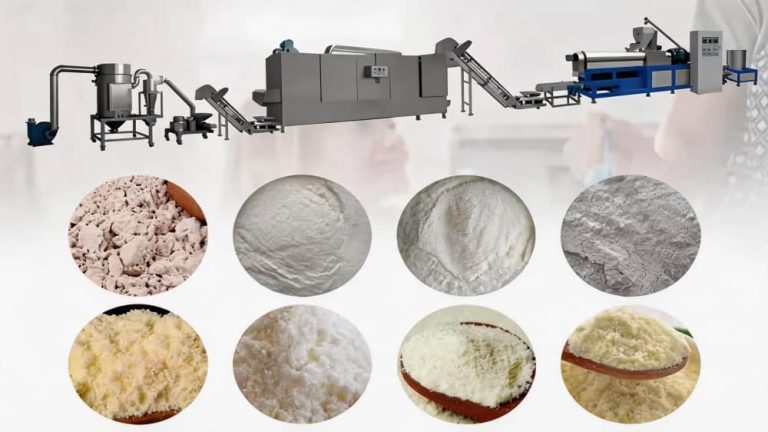
Standard fish feed grinding (40–60 mesh) is completely unviable for micro-pellet die plates. If raw ingredient particles exceed 30% of the die hole diameter, instantaneous aperture clogging occurs. Zhuoheng’s micro-pellet processing lines incorporate an Air-Classifier Pulverizer (WFJ Series) to reduce raw mix particle sizes to 80–120 mesh (125–180μm). Finer particles drastically increase specific surface area, accelerating thermal hydration and starch matrix cross-linking inside the barrel.
2. Isothermal Barrel Pressure & High Protein Cross-Linking
When extruding micro-pellets through 0.8mm–1.5mm apertures, backpressure inside the barrel increases exponentially. Standard extruders suffer from material backflow and thermal scorching. Zhuoheng twin-screw extruders utilize a specialized low-shear, high-torque screw profile combined with precise multi-zone water cooling jackets. This maintains melt temperature between 85°C and 105°C, enabling marine proteins to denature and cross-link with starches into a durable, rubbery matrix without scorching heat-sensitive lipids or vitamins.
3. High-Speed Direct Cutter Mechanics
Cutting micro-pellets at die discharge requires extreme blade speed and zero blade-to-die gap. Zhuoheng deploys a frequency-controlled cutter head with pneumatic axial adjustment, driving ultra-thin high-hardness alloy blades up to 3,600 RPM. This produces uniform, clean-cut micro-cylinders without pellet deformation, tailing, or dust formation.
Micro-Pellet Processing Parameter Matrix
| Processing Parameter | Micro-Pellet (0.8mm – 1.0mm) | Starter Shrimp Feed (1.2mm – 1.5mm) | Standard Aquafeed (2.0mm – 3.0mm) |
|---|---|---|---|
| Raw Grinding Fineness | 100 – 120 Mesh (≤ 150μm) | 80 – 100 Mesh (≤ 180μm) | 60 – 80 Mesh (≤ 250μm) |
| In-Barrel Moisture | 26% – 30% | 24% – 28% | 20% – 24% |
| Melt Temperature at Die | 85°C – 98°C | 90°C – 105°C | 115°C – 135°C |
| Starch Gelatinization | 88% – 95%+ | 85% – 92% | 85% – 90% |
| Water Stability Duration | ≥ 12 – 24 Hours | ≥ 12 – 18 Hours | ≥ 6 – 12 Hours |
| Cutter Rotation Speed | 2,800 – 3,600 RPM | 2,200 – 2,800 RPM | 1,200 – 1,800 RPM |
Metallurgical Defense: Premium 38CrMoAl Barrel Protection
Extruding dense micro-pellet formulations generates high internal hydrostatic pressures (≥60 bar) and continuous abrasive friction against the barrel liner. Zhuoheng manufactures all micro-pellet screws and barrel liners from 38CrMoAl nitrided alloy steel. Treated with deep gas nitriding to achieve a surface hardness of ≥HV850 and a nitrided depth of 0.5–0.8mm, our barrels resist severe wear and high-pressure stress, maintaining precise screw-to-barrel clearances over 8,000 operational hours.
Frequently Asked Questions (FAQ)
Q1: What is the minimum pellet size achievable on Zhuoheng aquafeed extruders?
A1: With our precision micro-hole die plates and Air-Classifier Pulverizer systems, Zhuoheng twin-screw extruders reliably produce micro-pellets down to 0.8mm in diameter with uniform length and high water stability.
Q2: How do you achieve 12+ hours of water stability in shrimp feed without chemical binders?
A2: By combining ultrafine grinding (80–120 mesh), precise moisture conditioning (26%–30%), and low-temperature high-torque twin-screw shear, starches achieve ≥88% gelatinization and fully encapsulate marine proteins into a dense, water-insoluble structural matrix.
Q3: How does Zhuoheng prevent micro-hole die clogging during long production runs?
A3: Prevention relies on two factors: (1) integrating our WFJ Air-Classifier Pulverizer to guarantee raw material fineness ≤150μm, and (2) engineered die plate flow channels that maintain uniform pressure and shear across every aperture.
Q4: Do you offer complete turnkey engineering for shrimp feed plant setup?
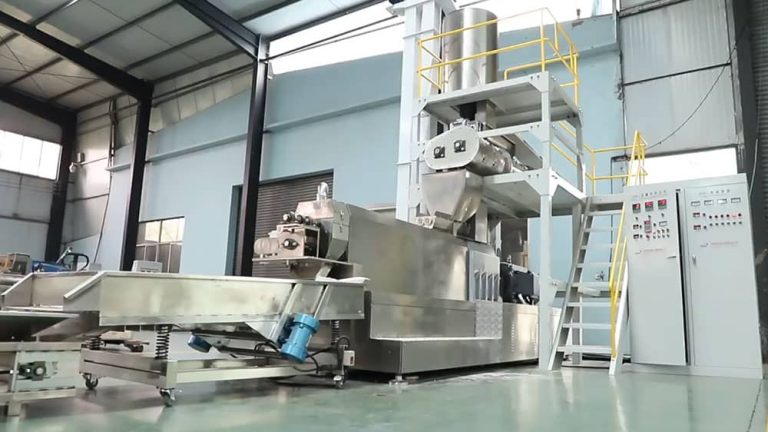
A4: Yes. Zhuoheng provides end-to-end turnkey engineering services, including 3D factory layout, micro-pulverizer integration, twin-screw extrusion equipment, multi-layer belt dryers, vacuum oil coaters, and overseas commissioning by senior engineers.