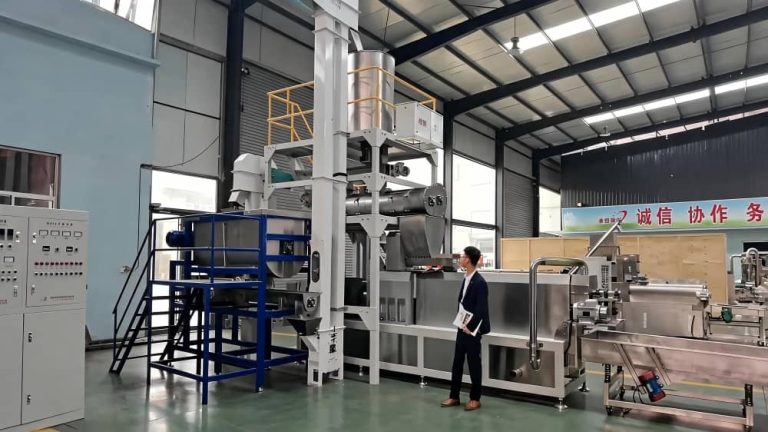
Protecting Your Heavy-Duty Extrusion Investment
A twin-screw extrusion line serves as the beating heart of your food or feed manufacturing plant. When the extruder halts, the entire downstream production chain stops, leading to missed delivery schedules, wasted raw materials, and severe financial losses. Given that industrial extruders operate under extreme thermodynamic conditions—involving high heat, immense internal pressures, and relentless mechanical abrasion—wear and tear are inevitable. The secret to long-term profitability is transitioning your factory from a reactive “fix-it-when-it-breaks” mentality to a rigorous, proactive preventive maintenance protocol.
1. The Daily Operational Routine: Purging and Lubrication
The absolute foundation of extruder longevity is built upon strict daily operational discipline executed by the floor engineers.
- Mandatory Purging Procedures: Never shut down a hot extruder while it is fully loaded with high-protein or highly viscous formulations. Always purge the system with a designated, cheap cleaning mix (typically a coarse cornmeal and water blend) before powering down. Failure to do so allows residual protein and starch to bake into a rock-hard carbonized mass, which can completely seize or shatter the expensive screw elements upon the next startup attempt.
- Gearbox and Bearing Care: The gearbox endures the entirety of the machine’s immense rotational torque. Daily checks of the oil sight glass for level and clarity, alongside monitoring the functionality of the automated cooling/lubrication pump, are non-negotiable. Zhuoheng machines feature integrated alarm systems for oil pressure, but visual confirmation remains a standard engineering best practice.
2. Monitoring Critical Wear Parts: Screws and Barrel Liners
The modular screw elements and the inner barrel sleeves are the primary sacrificial wear components. As they undergo abrasive degradation over thousands of hours, the critical clearance (the gap between the screw flight apex and the barrel wall) increases. This loss of tight tolerance leads to reduced pumping efficiency, loss of internal pressure, diminished shear forces, and ultimately, a severe drop in product quality (e.g., poor expansion in snacks, or loss of buoyancy in floating fish feed).
Standard Preventive Maintenance Schedule
| Component | Inspection / Action Frequency | Critical Wear Indicator |
|---|---|---|
| Gearbox Oil | Check daily / Replace entirely every 3,000 hours | Oil discoloration, burnt smell, loss of pressure alarm |
| Modular Screw Elements | Measure clearance every 3 to 6 months | Clearance gap > 2-3mm, sudden drop in extrusion die pressure |
| Barrel Liners (38CrMoAl) | Inspect annually (or bi-annually for high-ash feed) | Internal grooving, significant loss of self-cleaning efficiency |
| Thermocouples & Heaters | Calibrate every 6 months | Inconsistent gelatinization, localized burning of product |
3. Predictive Replacement and Sensor Calibration
Do not wait until the machine fails to produce a viable product. By actively charting the wear rate over time, engineers can accurately predict when elements will reach their critical failure threshold and schedule replacements during planned holiday downtimes. Zhuoheng’s modular spline-shaft design allows operators to quickly slide off and replace only the specific worn segments (usually the high-shear kneading blocks near the discharge die), rather than replacing the entire expensive shaft.
Furthermore, modern extrusion is heavily reliant on automated PLC logic. However, an intelligent PLC is entirely blind without accurate sensor data. Regularly calibrate all heating zone thermocouples and verify the flow rates of the barrel water-cooling jackets to prevent silent, dangerous internal pressure spikes.