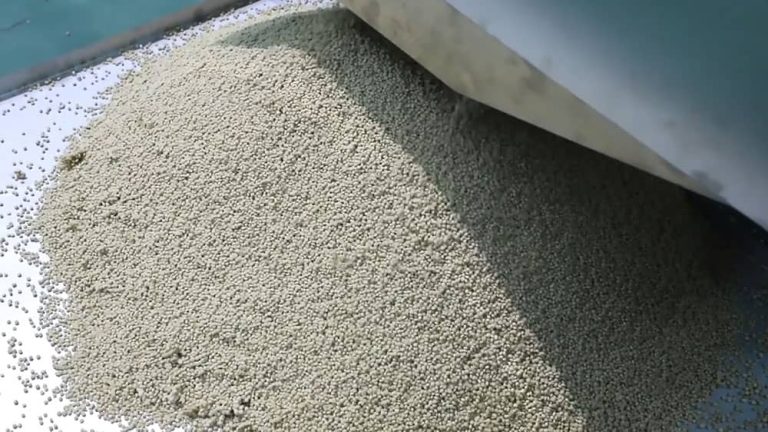
The Engineering Challenge of Micro-Pellet Aquatic Feed Manufacturing
In global shrimp aquaculture (such as Penaeus vannamei farming) and larval fish hatcheries, feed pellets must satisfy two stringent physical criteria: ultra-small diameter (typically 0.8 mm to 1.5 mm) and extreme hydro-stability. Because shrimp are slow, bottom-dwelling feeders that nibble their food over hours, low-quality feed pellets that disintegrate quickly in water cause severe nutrient leaching, water pollution, and massive economic loss for farm owners.
Manufacturing micro-pellet aquafeeds on continuous twin-screw extruders presents severe processing bottlenecks: micro-orifice die plates suffer from high backpressure and frequent hole clogging, while excessive thermal shear can degrade heat-sensitive marine lipids and binder proteins. Achieving 12-hour water stability requires precise coordination between starch gelatinization, Specific Mechanical Energy (SME) management, and micro-die hydraulics on a Zhuoheng Twin-Screw Extrusion Platform.
Key Takeaways / TL;DR
- Water Stability Benchmark: High-grade extruded shrimp feed must maintain structural integrity in seawater for 12 to 24 hours without leaching water-soluble proteins or collapsing into sludge.
- Starch Gelatinization & Bind Threshold: Pre-cooking wheat flour or cassava starch to a pre-gelatinization rate of ≥90% via a Biaxial Differential Conditioner forms a continuous, insoluble elastic matrix that traps protein particles.
- Anti-Clogging Die Hydraulics: Utilizing high-precision 38CrMoAl nitrided micro-die plates combined with Delta Variable Frequency Drive (VFD) cutter head speed control prevents melt stagnation and guarantees uniform 1.0mm pellet lengths.
1. Physicochemical Mechanics: Achieving 12-Hour Hydro-Stability
Unlike livestock feeds that rely on simple mechanical compression, micro-pellet shrimp feed relies on the thermal melting and cross-linking of functional binders (wheat gluten, alpha-starch, and squid meal) under high moisture and controlled temperature:
- Biaxial Differential Pre-Conditioning: Raw formulation mash is saturated with low-pressure utility steam at 85°C–95°C for 120–180 seconds. This hydrates starch molecules deeply before they enter the extruder barrel, achieving >85% pre-gelatinization without consuming excessive electrical friction.
- Low-Expansion Sinking Matrix: Sinking shrimp pellets require a dense bulk density of 620 – 680 g/L. Barrel temperatures in the final discharge zone are maintained at a cool 95°C–105°C, preventing superheated steam flash expansion while promoting dense polymer cross-linking.
- Micro-Orifice Die Pressure Distribution: To prevent dough melt from bridging across hundreds of 1.0mm die holes, the die plate features conical entry channels engineered to balance flow velocity evenly from the center to the outer perimeter.
2. Operational Parameter Matrix: Micro-Pellet vs. Standard Fish Feed
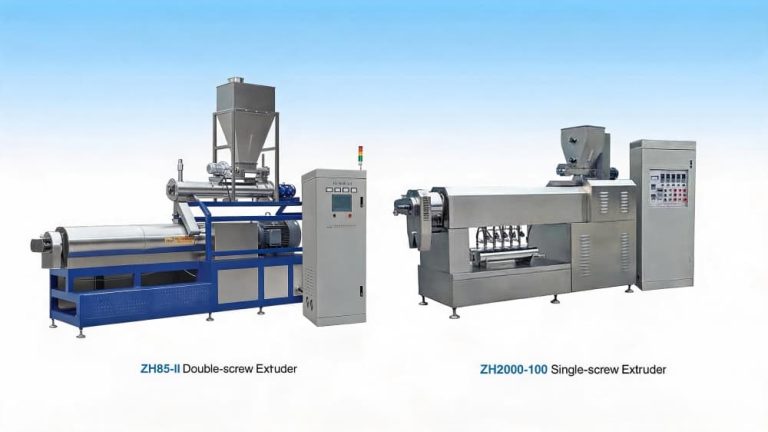
The following technical parameter comparison models the exact operational setpoints required on Zhuoheng Heavy-Duty Aquafeed Extrusion Lines (ZH85 and ZH95 platforms) for processing 1.0mm shrimp micro-pellets versus standard 3.0mm floating fish feeds.
| Processing Parameter | 1.0mm Shrimp Micro-Pellet Protocol | 3.0mm Floating Fish Feed Protocol |
|---|---|---|
| Target Pellet Diameter | 0.8 mm – 1.5 mm (Sinking) | 3.0 mm – 6.0 mm (Floating >98%) |
| Target Bulk Density | 620 – 680 g / L | 380 – 450 g / L |
| Water Stability Duration | 12 – 24 Hours (Intact Matrix) | 4 – 8 Hours (Floating Surface) |
| Preconditioner Moisture | 24% – 28% (High Hydration) | 18% – 22% (Steam Primary) |
| Die Zone Barrel Temperature | 95°C – 105°C (Controlled Cool) | 125°C – 140°C (Superheated Flash) |
| Specific Mechanical Energy (SME) | Low – Moderate (20 – 25 kWh/t) | High (30 – 38 kWh/t) |
| Cutter Speed Control | High RPM (Ultra-Precise Fly Cut) | Standard RPM (Variable Pitch) |
3. Critical Machinery Configurations for Micro-Pellet Lines
Producing commercial shrimp feed without massive scrap rates requires specialized downstream processing components:
- Pulverizer Ultra-Fine Grinding Unit: Raw material particle size must not exceed 1/3 of the die orifice diameter. Before extrusion, raw meals pass through a Zhuoheng ultra-fine pulverizer to achieve 80–100 mesh (<150 microns) fineness, eliminating die hole blockage.
- 38CrMoAl Nitrided Micro-Die Plates: Micro-die plates undergo plasma nitriding (surface hardness ≥ HV850 / HRC 65+). Smooth internal hole polishing reduces wall friction, ensuring consistent extrusion velocity across all holes.
- Pneumatic Conveying & Vibration Screen: Upon exit from the die cutter, delicate micro-pellets are immediately cooled by an air-conveying system and passed over a multi-deck grading sieve to eliminate fine dust before entering the multi-layer dryer.
Frequently Asked Questions (FAQ)
1. Why do small 1.0mm die holes clog frequently during shrimp feed extrusion?
Die clogging is caused by two factors: unground raw meal fibers larger than 200 microns or premature starch scorching inside dead zones. Installing an upstream ultra-fine pulverizer (80–100 mesh) and utilizing a Zhuoheng self-wiping co-rotating twin-screw extruder eliminates un-melted lumps and prevents die bridging.
2. How do I increase water stability without making the pellet too hard for shrimp to digest?
Water stability should come from thorough pre-gelatinization of native starches (>90% gelatinization rate) rather than excessive mechanical baking or artificial chemical glues. Biaxial pre-conditioning hydrates the dough naturally, creating an elastic matrix that shrimp can digest easily while retaining 12-hour water stability.
3. Can a Zhuoheng micro-pellet line be converted to produce larger fish feeds?
Yes. By replacing the micro-die plate with a standard 3.0mm–8.0mm die, updating the screw speed setpoint via the Delta VFD, and raising the final barrel zone temperature, the line seamlessly transitions to producing floating tilapia, catfish, or carp feed.
Upgrade Your Plant for Premium Micro-Pellet Feed Profits
Capturing high-margin shrimp feed and marine fish hatchery markets requires machinery built for micro-precision. Zhuoheng’s turnkey aquafeed extrusion lines deliver continuous 0.8mm–1.5mm micro-pellet capability with 12-hour water stability. Contact our aquatic process engineering team today to receive CAD plant layouts, micro-die specifications, and a factory-direct quotation.