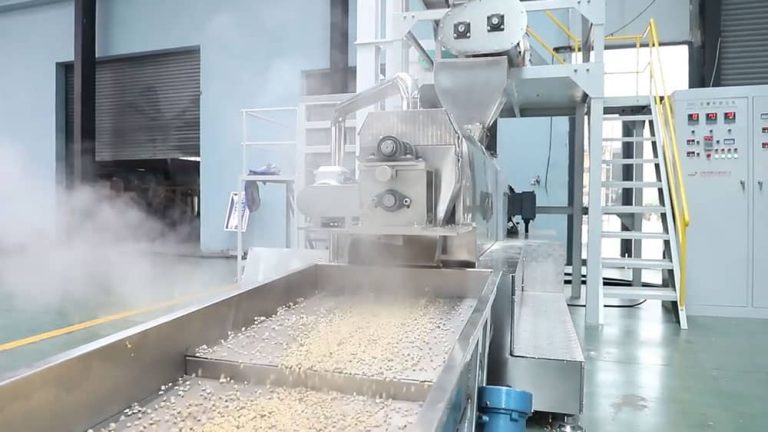
Extrusion Engineering: Overcoming Hydro-Lubrication in High-Fresh-Meat Kibble
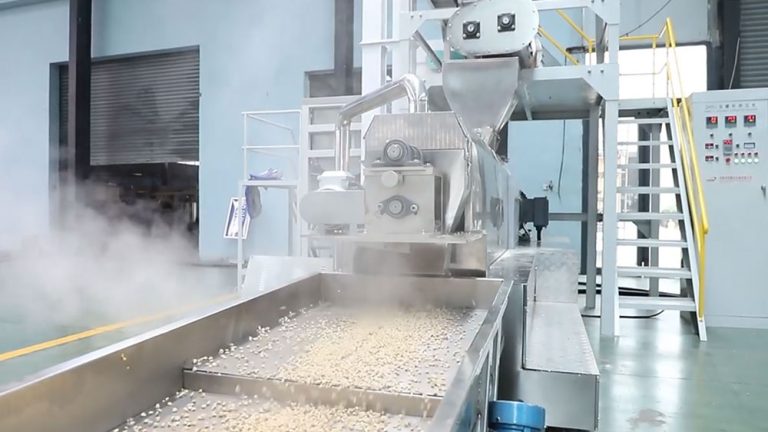
In premium grain-free pet food manufacturing, introducing over 40% fresh meat slurry into the extrusion line represents a major thermodynamic and physical hurdle. Consumer demand for high-protein, biologically appropriate pet diets continues to drive this trend, but processing high-moisture fresh meat slurries presents significant operational challenges during twin-screw extrusion:
- Hydro-Lubrication Slippage & Pressure Surging: High moisture and liquefied animal fats create a lubricating film along the barrel interior, reducing wall friction and causing dough to slip backward rather than convey forward smoothly.
- Suppression of Mechanical Shear Energy (SME): The lubricating moisture layer dampens friction between the screw elements and dough, preventing the mechanical shear required for thorough starch gelatinization.
- Structural Instability & Crumble: Insufficient dough maturation results in erratic kibble expansion, weak structural integrity, excessive fines generation, and unpalatable texture.
Key Takeaways / TL;DR
- Thermal Pre-Gelatinization Threshold (≥88%): Injecting direct steam into a double-shaft differential pre-conditioner pre-cooks dry starches, compensating for in-barrel SME loss caused by fat lubrication.
- Positive Displacement Conveying: Co-rotating fully intermeshing 38CrMoAl nitrided twin screws wipe dough continuously from opposite flights, eliminating wall slippage and surge.
- Zoned Meat Slurry Dosing: Introducing fresh meat slurry through dedicated downstream injection ports prevents premature thermal degradation of delicate animal proteins.
Pre-Conditioning Thermodynamics: Thermal Energy Compensation
To overcome shear suppression inside the extrusion barrel, thermal energy must be maximized during pre-conditioning prior to barrel entry. Zhuoheng integrates a heavy-duty double-shaft pre-conditioner mounted directly above the main extruder feed inlet.
Differential Speed & Extended Residence Time
Zhuoheng’s double-shaft pre-conditioner uses counter-rotating shafts operating at differential speeds to mix dry flours with steam and liquid slurries:
- Extended Residence Time: The overlapping paddle arrangement increases material retention time inside the pre-conditioner chamber, allowing heat to penetrate starch granules uniformly.
- Starch Pre-Gelatinization: High-temperature steam thermal conditioning pre-gelatinizes the starch matrix, improving material ripening and reducing mechanical strain inside the barrel.
- Controlled Meat Slurry Injection: Fresh meat slurry is injected through designated dosing ports downstream in the conditioning chamber, ensuring homogeneous moisture distribution without thermal degradation of animal proteins.
Twin-Screw Extruder Architecture: Anti-Slippage Design & Control
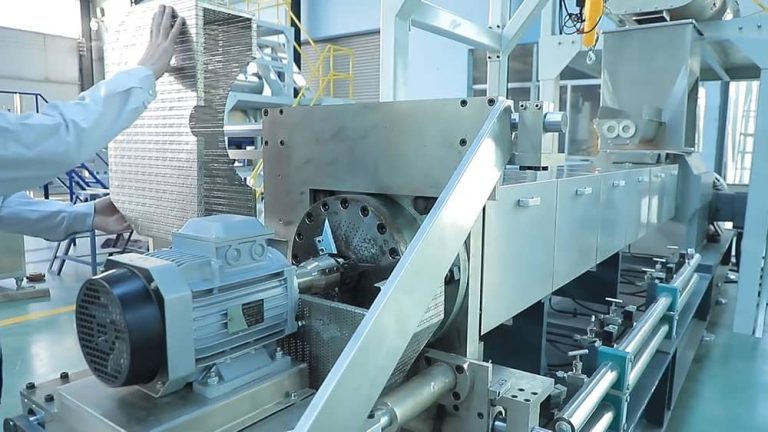
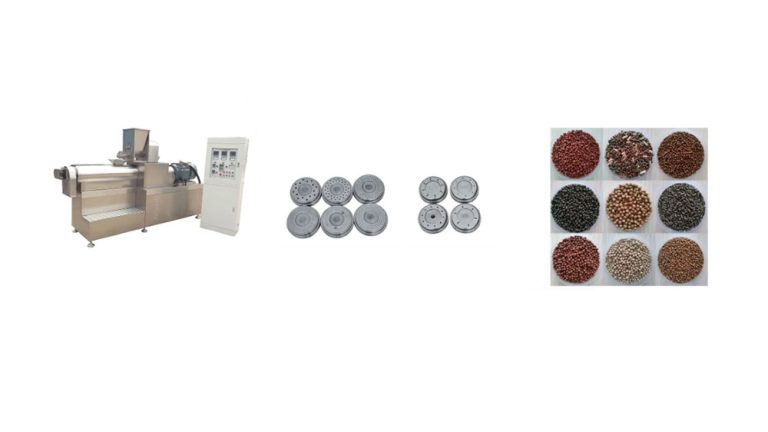
Zhuoheng’s ZH-series co-rotating twin-screw extruders (including the ZH70-II, ZH85-II, and ZH95-I) feature specific mechanical structures engineered to process high-moisture, high-lipid formulations reliably.
Double-Screw Forced Feeding System
To eliminate feed throat clogging and material bridging caused by sticky dough, Zhuoheng extruders utilize a double-screw forced feeding system with photoelectric sensor tracking to maintain consistent material delivery.
Intermeshing Self-Cleaning Screw Profile
The co-rotating twin screws feature a fully intermeshing, self-cleaning profile. The intermeshing flights scrape dough from the opposite screw root, maintaining positive displacement conveying even under hydro-lubrication conditions.
38CrMoAl Alloy Nitrided Screws & VFD Precision Control
Screw elements are crafted from 38CrMoAl alloy steel with nitriding treatment, delivering high strength and wear resistance under high-torque processing. Variable Frequency Drive (VFD) controls are applied across the feeder, main drive motor, and rotary face cutter, enabling dynamic adjustment of screw speed and shear force based on dough viscosity.
6-Zone Independent Thermal Regulation
The extrusion barrel features 6 independent temperature control zones equipped with automatic cooling channels and infrared stainless steel heating. This allows precise thermal gradient management across feeding, melting, and die zones to control kibble density and moisture flashing.
Processing Parameter Matrix: Fresh Meat Slurry Inclusions
The matrix below compares key extrusion parameters across standard dry kibble, medium fresh meat, and ultra-high (40%+) fresh meat slurry processing lines:
“Zhuoheng’s double-screw extrusion line has significantly stabilized our pet food production. The high fresh meat addition technology and comprehensive operator training are exactly what we needed.” — Piotr K., Plant Manager (Poland)
Frequently Asked Questions (FAQ)
Q1: How does Zhuoheng achieve stable extrusion when fresh meat slurry exceeds 40% without screw slippage?
A1: High fresh meat slurry (>40%) introduces substantial moisture and lipids that can cause wall slippage inside standard barrels. Zhuoheng solves this through a three-part engineering system: (1) a double-shaft differential pre-conditioner that pre-gelatinizes starches via steam before slurry contact; (2) a double-screw forced feeder that prevents feed throat bridging; and (3) co-rotating fully intermeshing 38CrMoAl nitrided screws that maintain positive displacement conveying regardless of wall lubrication.
Q2: Why is double-shaft conditioning essential for high-moisture grain-free formulas compared to single-shaft mixers?
A2: Single-shaft mixers lack the residence time and differential shearing needed to hydrate dense protein meals and starches when large volumes of liquid meat slurry are present. Zhuoheng’s counter-rotating dual shafts fold and shear dough continuously, increasing residence time and pre-gelatinizing starch granules to preserve high Specific Mechanical Energy (SME) inside the barrel.
Q3: Can high fresh meat slurry cause kibble crumble or structural collapse after drying?
A3: Yes, if starch gelatinization rate falls below 80%. By combining high-temperature steam conditioning in the pre-conditioner with multi-zone barrel thermal control (6 independent cooling/heating zones) and multi-layer circulation drying (<10% final moisture), Zhuoheng lines ensure thorough starch-protein matrix cross-linking, resulting in crisp, durable kibbles with minimal fines.
Q4: Does Zhuoheng provide factory commissioning and recipe validation for overseas pet food projects?
A4: Yes. Zhuoheng delivers full end-to-end engineering support, including 3D plant layout design, utility CAPEX/OPEX calculations, factory acceptance testing (FAT), and on-site commissioning by experienced engineers for clients worldwide.
Technical Consultation & Custom Line Design
For pet food manufacturers planning to upgrade dry kibble production for high fresh meat or grain-free recipes, Jinan Zhuoheng Extrusion Machinery provides recipe feasibility reviews, utility CAPEX/OPEX calculations, and customized 3D plant layouts.