The Engineering Challenge of High-Fat Premium Pet Nutrition
The global pet food market is experiencing a rapid shift toward high-energy, biologically appropriate, and biologically dense formulations. Modern premium dog kibbles and specialized feline diets frequently require total fat inclusions ranging from 12% up to 22%+ to meet stringent caloric and nutritional profiles. However, processing these high-lipid matrices introduces severe thermodynamic and mechanical hurdles for pet food manufacturers.
When fat levels exceed standard limits during extrusion, commercial producers face two persistent quality failures:
- Kibble Softening & Structural Collapse: High fat inside the extruder barrel lubricates the melt, drastically reducing mechanical shear and preventing the starch gelatinization required for structural expansion and crispness.
- Surface Oil Leakage & Packaging Staining (“Oiling Out”): High fat applied via poorly controlled surface spraying fails to penetrate the kibble, creating a greasy, unpalatable surface that leaks through paper packaging, oxidizes rapidly, and turns rancid.
To overcome these challenges, processors must optimize the balance between In-Barrel Fat Injection and Post-Extrusion Continuous Liquid Spraying, utilizing Zhuoheng’s multi-stage liquid coating and drum seasoning architecture.
—
In-Barrel Addition vs. Post-Extrusion Coating: Technical Limits
1. In-Barrel Liquid Fat Injection: The SME Bottleneck
Injecting liquid lipids directly into the extruder barrel or pre-conditioner allows for homogeneous distribution throughout the raw dough matrix. However, fat acts as an aggressive internal lubricant inside the barrel.
- Shear Reduction: As fat content inside the barrel rises above 6%–8%, internal friction drops sharply. The twin screws lose their ability to impart Specific Mechanical Energy (SME) to the melt.
- Incomplete Starch Gelatinization: Reduced SME and lower barrel pressure prevent starches from fully gelatinizing (<85%), resulting in dense, unexpanded, and easily crumbly kibbles with poor gastrointestinal digestibility.
- Slippage & Stalling: Excessive in-barrel fat causes severe screw slippage, pressure surges, and potential drive motor overload.
2. Post-Extrusion Liquid Coating: Penetration & Distribution Dynamics
To protect extrusion SME and achieve complete starch expansion, high-fat formulations (12%–20% total lipid) must shift the majority of fat inclusion to the post-drying stage. However, conventional single-stage spraying introduces severe quality risks if oil penetration is not properly managed:
- Surface Tension Barriers: At improper atomization temperatures, high-viscosity fats (such as tallow, poultry fat, or fish oil) remain trapped on the outermost pore walls of dry kibbles.
- Greasy Hand-Feel & Oil Bleedout: Over-saturated kibble surfaces release free oil during warehouse storage, causing severe grease staining on multi-wall paper bags and consumer rejection.
- Oxidative Instability: Surface-bound fat exposed to ambient air rapidly undergoes lipid oxidation, destroying essential fatty acids and volatile palatability digests.
—
Zhuoheng Multi-Stage Liquid Spraying & Coating Solution
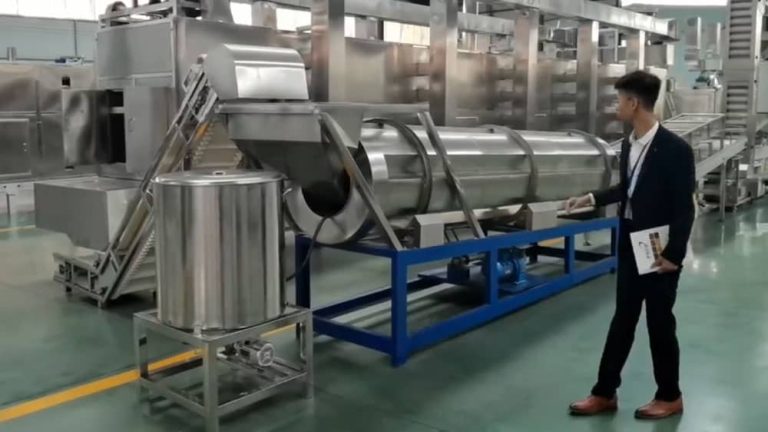
Zhuoheng’s integrated Post-Extrusion Coating Architecture (PTG & GTW-D Series) fundamentally resolves high-fat coating challenges through precise thermal management, high-pressure liquid atomization, and gentle continuous drum tumbling.
Key Engineering Features of Zhuoheng Coating Systems:
- Heated Liquid Dosing & Atomization: Liquid fats and palatability digests are maintained in jacketed heating tanks and pumped through fine-mist atomizing nozzles, ensuring low viscosity and rapid capillary absorption into warm kibble pores.
- Dual-Drum Tumbling Dynamics (GTW-D Series): The slow-rotating, inclined octagonal drum design continuously turns the kibble bed without causing granule breakage, ensuring 100% surface coverage and uniform oil migration.
- Synchronized Liquid & Powder Coating: Enables sequential application of liquid fats, liquid digests, and dry palatants or probiotics, locking flavor compounds onto the kibble surface.
—
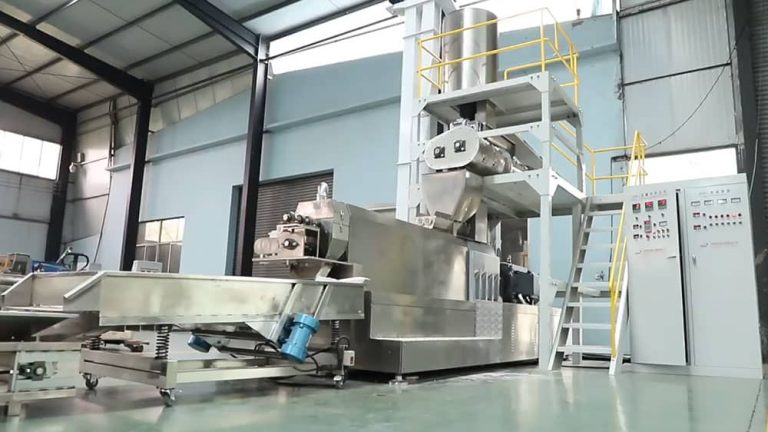
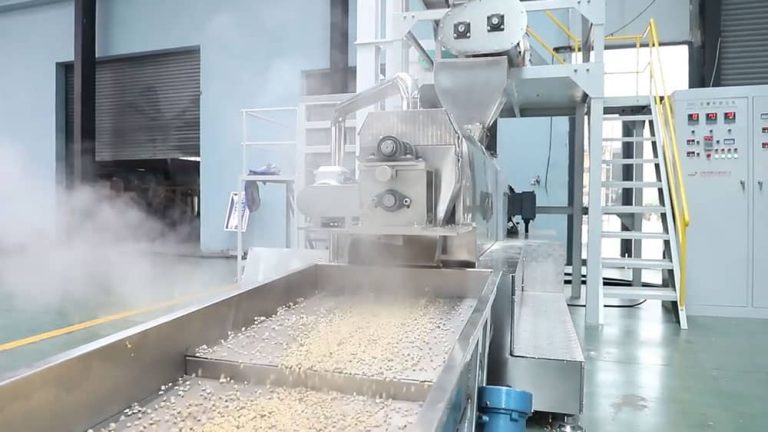
Zhuoheng Turnkey High-Fat Pet Food Line Architecture
Zhuoheng Machinery engineers fully integrated, automated pet food production ecosystems specifically optimized for high-fat, high-protein kibbles:
- Multi-Shaft Differential Pre-Conditioner: Pre-cooks dry starches with steam and water, allowing up to 4%–5% safe in-barrel fat or fresh meat inclusion without torque loss.
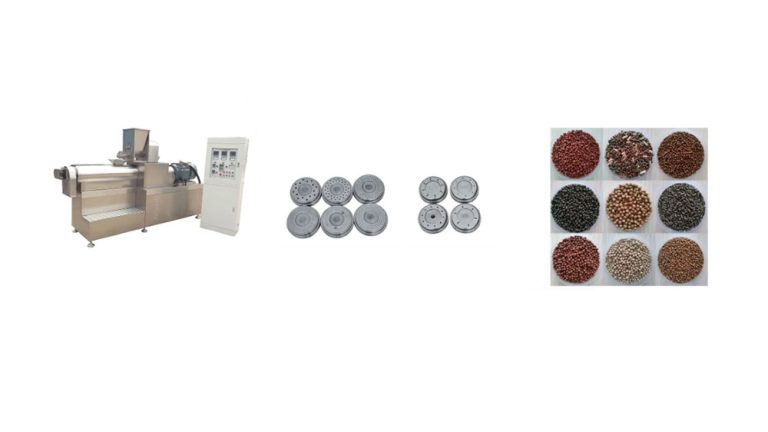
- High-Torque Twin-Screw Extrusion (ZH Series): Driven by Siemens main motors and Delta VFDs, featuring nitrided alloy screws that deliver precise Specific Mechanical Energy (SME) for high expansion and open pore creation.
- Multi-Layer Thermodynamic Dryer: Dehydrates raw kibbles to uniform target moisture (<8%) and optimal water activity (aw), opening surface pores for liquid absorption.
- Continuous Liquid Spraying & Drum Coating System (PTG / GTW-D Series): Delivers precise, PLC-controlled liquid oil spraying and uniform flavor coating without kibble degradation.
- Counter-Flow Convective Cooler: Rapidly stabilizes kibble temperature to ambient before automated packaging, preventing internal moisture condensation.
—
Frequently Asked Questions (FAQ)
Q1: What is the optimal ratio between in-barrel fat and post-extrusion sprayed fat for an 18% fat cat food?
A1: For an 18% total fat formulation, we recommend adding 4%–5% fat in-barrel (or via the pre-conditioner) to lubricate the die exit and maintain elasticity, and applying the remaining 13%–14% fat via the Zhuoheng PTG/GTW-D post-extrusion liquid spraying system. This protects starch gelatinization inside the barrel while ensuring maximum flavor retention.
Q2: Does continuous drum coating cause kibble breakage during tumbling?
A2: No. Zhuoheng’s GTW-D series continuous seasoning drums feature polished SS304 internal flights and slow, variable-frequency rotation specifically designed for gentle product handling. Fines and breakage rates are held strictly under 0.5%, even for small cat kibbles.
Q3: Can heat-sensitive liquid palatants and dry probiotics be applied on this line?
A3: Yes. Because post-extrusion liquid spraying occurs after the drying phase at controlled temperatures (50°C–60°C), heat-sensitive liquid digests, vitamins, enzymes, and dry probiotics can be metered directly into the coating drum without thermal degradation.
Q4: How does temperature control affect fat absorption during spraying?
A4: Maintaining liquid fats at 50°C–65°C reduces viscosity, allowing oil droplets to penetrate quickly into warm, porous kibbles exiting the dryer. Zhuoheng’s jacketed liquid dosing tanks ensure constant temperature control throughout continuous production runs.