The Extrusion Rheology of High-Protein Cold-Water Aquatic Feeds
In high-value carnivorous cold-water aquaculture—specifically for species such as Atlantic salmon, rainbow trout, and Mediterranean sea bass—feed formulations carry stringent nutritional requirements: exceptionally high protein levels (45% to 55%) derived from premium fishmeal and squid meal, combined with high dietary lipid ratios (15% to 25%). Processing these high-nutrient formulations into durable, rapid-sinking pellets presents unique thermodynamic and rheological challenges.
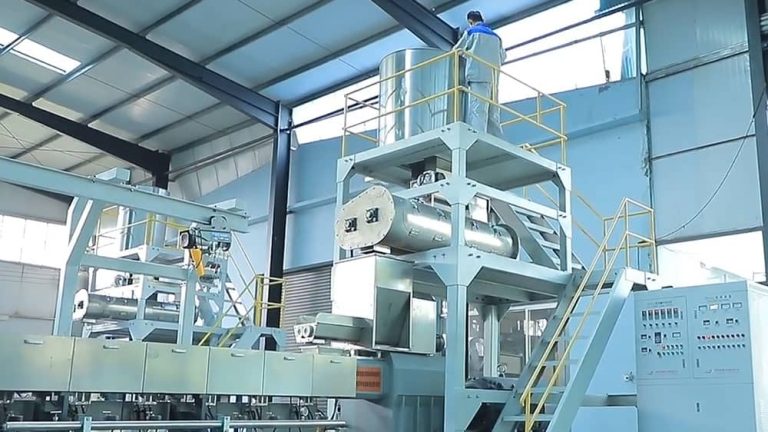
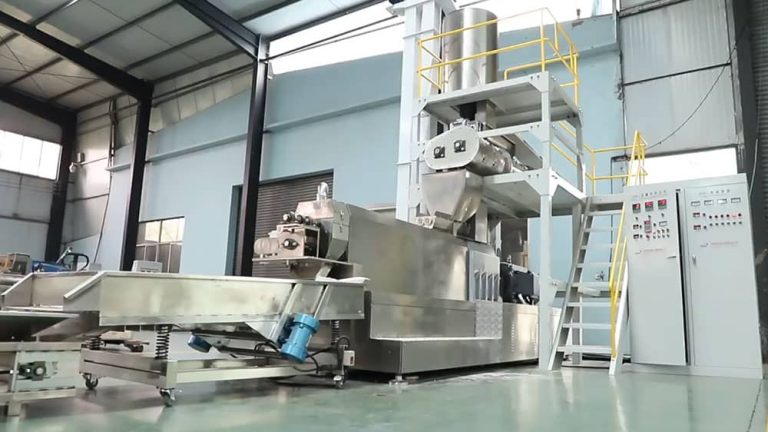
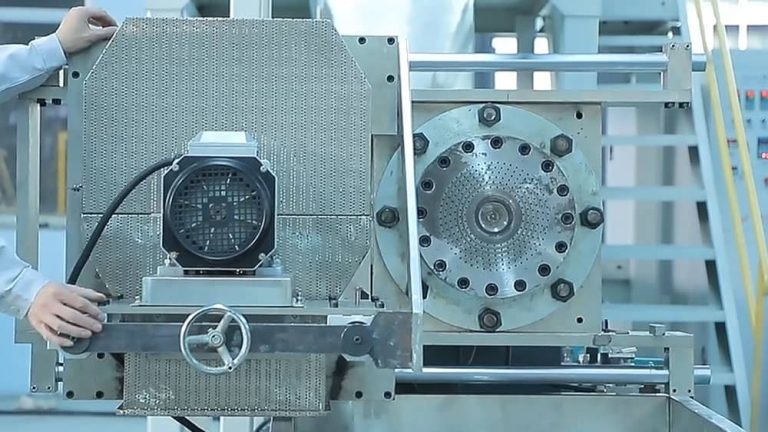
High protein levels increase dough viscosity and heat sensitivity, making the formulation prone to burning or scorching under high mechanical shear. Concurrently, elevated oil levels lubricate the screw channel, reducing internal friction and causing dough slippage inside the barrel. Achieving a high pellet bulk density (>600 g/L) with 100% sinking reliability and a high Pellet Durability Index (PDI >98%) requires specialized low-shear 38CrMoAl screw profiles, precise moisture hydration, and controlled temperature regulation on a Zhuoheng Twin-Screw Extrusion Platform.
Key Takeaways / TL;DR
- Sinking Density Threshold: Cold-water marine feeds require a high bulk density of 600 to 680 g/L and low void fraction, ensuring pellets sink rapidly (>0.12 m/s) to reach deep-water net pens without floating or breaking.
- Low-Shear Screw Geometry: Utilizing gentle conveying screw elements with reduced kneading block ratios prevents protein thermal denaturation and prevents fat separation inside the barrel during extrusion.
- Thermal Hydration via Biaxial Conditioner: Pre-cooking high-protein meals with low-pressure saturated steam at 85°C–95°C achieves a ≥85% starch/protein pre-gelatinization rate, lowering main drive electrical friction ($SME$) requirements.
1. Micro-Rheology: Balancing High Fat, High Protein, and Pellet Compactness
To produce stable cold-water fish feed, process engineers must control three competing physical mechanisms inside the extruder barrel:
- Preventing Fat Slippage: When dietary fat exceeds 12% inside the barrel, oil coats raw material particles, reducing internal friction.zhuoheng co-rotating twin screws maintain positive volumetric displacement, forcing the viscous dough forward through high-pitch transport flights without surging or backflow.
- Suppressing Steam Flash Expansion: Floating feeds rely on superheated steam expansion at the die face. For sinking salmon and trout feeds, barrel temperatures in the final metering and die zones are held at a cool 90°C to 105°C, keeping internal steam pressure below the flash threshold so the pellet structure remains compact and dense.
- Protein Cross-Linking for Hydro-Stability: Marine proteins (fishmeal, krill meal) undergo heat-induced cross-linking during conditioning and extrusion. Proper thermal hydration forms a continuous polymer network that binds the pellet, preventing water dissolution for over 12 hours in seawater.
2. Operational Setpoint Matrix: Cold-Water Sinking Feed vs. Warm-Water Feed
The following technical parameter comparison models the exact operational setpoints required on Zhuoheng Heavy-Duty Aquafeed Extrusion Lines (ZH85 and ZH95 platforms) for processing 45%+ protein sinking salmon/trout feed versus standard floating tilapia feed.
| Processing & Rheological Metric | High-Protein Cold-Water Sinking Feed Protocol | Standard Warm-Water Floating Feed Protocol |
|---|---|---|
| Dietary Protein & Fat Content | 45% – 55% Protein / 15% – 22% Lipid | 28% – 35% Protein / 4% – 8% Lipid |
| Target Bulk Density | 600 – 680 g / L (100% Rapid Sinking) | 380 – 480 g / L (Floating >98%) |
| Specific Mechanical Energy (SME) | Low – Moderate (18 – 24 kWh / Ton) | High (30 – 38 kWh / Ton) |
| Preconditioner Moisture Ratio | 24% – 28% Total Moisture (High Steam) | 18% – 22% Total Moisture |
| Metering Barrel Temperature Zone | 90°C – 105°C (Cooling Controlled Zone) | 125°C – 140°C (Superheated Steam Flash) |
| Screw Element Configuration | Low-Shear Conveying Flights (Minimal Kneading) | High-Shear Kneading & Mixing Blocks |
| Pellet Durability Index (PDI) | ≥ 98.5% (Dust-Free Marine Handling) | ≥ 96% Standard Mechanical Handling |
3. Key Engineering Components for High-Protein Sinking Lines
Processing premium cold-water feed without thermal degradation requires a specialized equipment configuration:
- Biaxial Differential Preconditioner: Features dual independent shafts operating at differential speed ratios (2:1). Saturated utility steam pre-cooks marine proteins and pre-gelatinizes binders at 85°C–95°C for 120–180 seconds, ensuring uniform hydration without generating high friction inside the barrel.
- 38CrMoAl Nitrided Low-Shear Screw Shafts: Modular screw elements are forged from high-grade 38CrMoAl alloy steel with plasma nitriding (surface hardness ≥ HV850 / HRC 65+). Low-shear conveying geometry reduces mechanical dissipation, preserving heat-sensitive amino acids and vitamins.
- Delta VFD Main Drive Speed Tuning: Screw RPM is regulated via Delta Variable Frequency Drives (VFDs) interlocked with Siemens PLC touch-screen controls. Operators dial down screw speed (180–220 RPM) to extend barrel residence time while keeping motor torque stable.
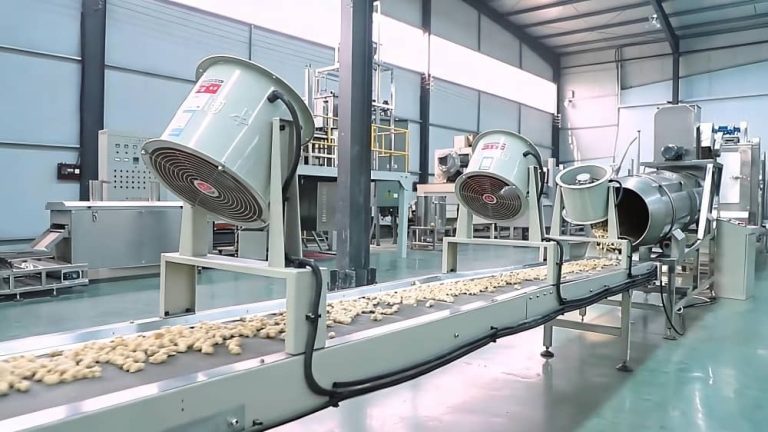
- Post-Extrusion Vacuum Fat Coating: For formulations requiring >18% total fat, 10%–12% oil is added during extrusion, while the remaining oil is infused into the dried pellet matrix using a downstream vacuum coater, preventing surface oil bleeding.
Frequently Asked Questions (FAQ)
1. Why do high-protein fish feed pellets float or sink slowly when extruded?
Slow sinking or accidental floating occurs when final barrel temperatures are too high or when dough moisture is too low, causing superheated water to flash into micro steam bubbles at the die. To fix this, lower final barrel zone temperatures to 90°C–100°C and increase preconditioner steam moisture to achieve a dense bulk density (>620 g/L).
2. How do I prevent fat separation and screw slipping when extruding 20%+ oil formulations?
High internal fat acts as a lubricant that breaks positive displacement pumping. Solution: limit barrel fat injection to 10%–12%, utilize co-rotating twin screws with deep flight channels for positive transport, and apply the remaining oil via a downstream vacuum coating system after drying.
3. Can a Zhuoheng cold-water sinking feed line be reconfigured for floating fish feed?
Yes. Because Zhuoheng twin-screw extruders utilize modular screw elements and flexible PLC temperature zoning, operators can easily switch to floating feed production by increasing screw RPM via the VFD, raising barrel temperature setpoints to 130°C, and installing a restricted die plate.
Build Your High-Margin Cold-Water Aquafeed Mill Today
Unlocking high profitability in cold-water aquaculture requires precision extrusion machinery capable of handling delicate high-protein, high-fat formulations. Zhuoheng’s turnkey twin-screw extrusion systems deliver continuous sinking feed performance with high water stability and minimum energy consumption. Contact our aquatic process engineering team today to receive custom CAD plant layouts, formulation support, and a factory-direct quotation.