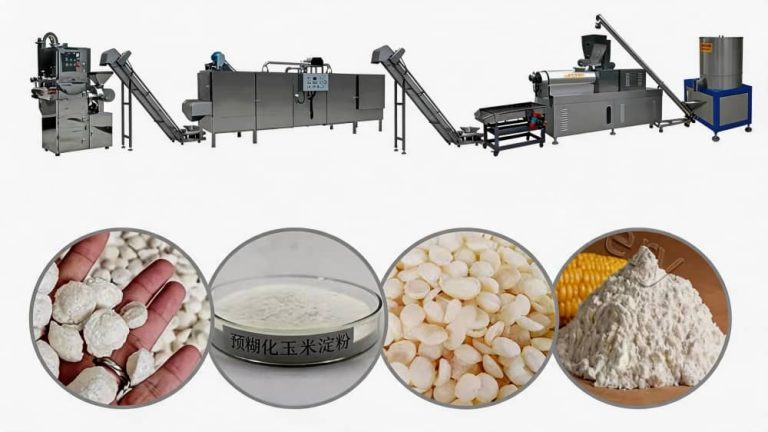
Transforming Native Starch through Thermo-Mechanical Engineering
Modified (or pregelatinized) starch is an immensely valuable industrial ingredient, utilized as a critical thickener and stabilizer in the food industry, a sizing agent in textile and paper manufacturing, and—most lucratively—as an API (American Petroleum Institute) grade fluid loss control additive in demanding oil and gas drilling operations. Traditional methods for modifying raw starch rely almost entirely on massive, wet-chemical batch reaction tanks. These legacy methods are notoriously slow, require huge facility footprints, consume astronomical amounts of thermal energy for post-reaction drying, and produce vast quantities of highly toxic chemical wastewater. Zhuoheng’s proprietary continuous reactive twin-screw extrusion technology fundamentally shatters this outdated paradigm, offering a highly sustainable, eco-friendly, and wildly profitable alternative for modern manufacturers.
The Reactive Extrusion Advantage: Speed, Precision, and Zero Wastewater
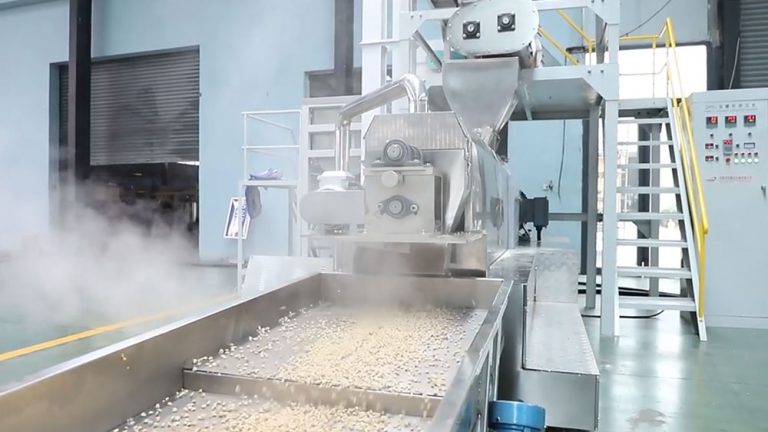
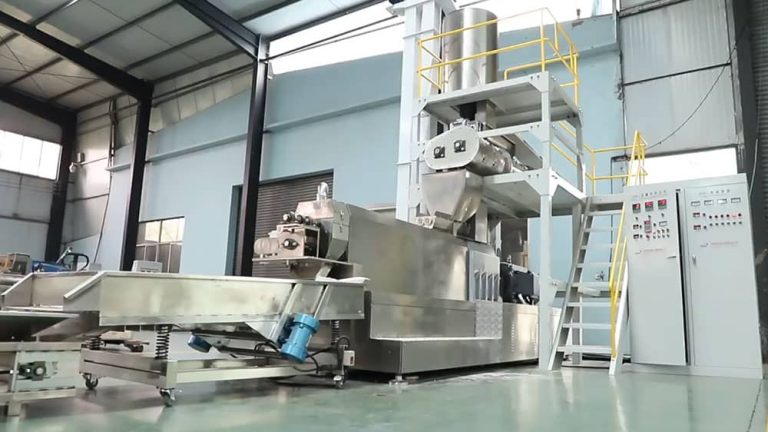
Inside Zhuoheng’s heavy-duty, high-torque twin-screw extruders (such as the industrial ZH85, ZH95, and ZH139 models), native base starches (corn, cassava, tapioca, or potato) are subjected to extreme, instantaneous thermo-mechanical treatment. The intense shear forces generated by the tightly intermeshing screws, combined with highly precise multi-zone electrical heating, create a volatile “melt” environment.
By injecting precise ratios of chemical modifying agents (such as cross-linking agents, specialized acids, or alkalis) directly into the pressurized barrel, complex chemical reactions that would take 12 to 24 hours in a batch tank are completed continuously in mere seconds. This forces rapid, incredibly uniform gelatinization and targeted molecular chain restructuring.
Traditional Tank Process vs. Reactive Extrusion
| Feature | Traditional Chemical Tank | Zhuoheng Reactive Extrusion |
|---|---|---|
| Processing Time | 12 – 24 hours (Batch process) | 30 – 60 seconds (Continuous process) |
| Wastewater Generation | Extremely high (Toxic chemical effluent) | Zero (Dry process, operating at 15-25% moisture) |
| Energy Consumption | Massive (Requires extensive post-reaction drying) | Significantly lower (High thermo-mechanical efficiency) |
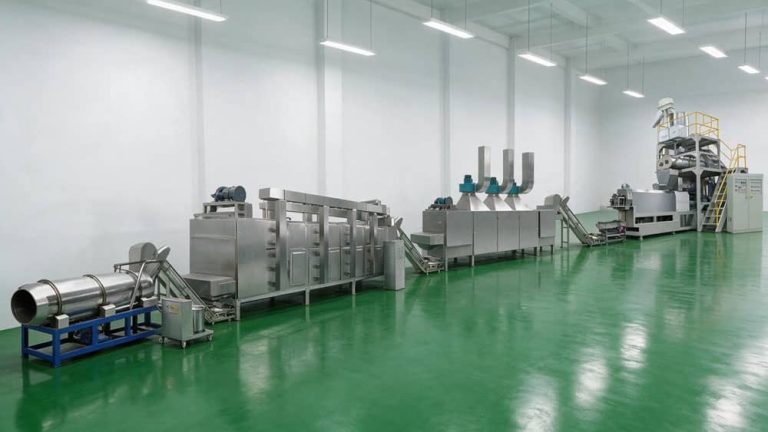
| Facility Footprint | Large tank farms and drying silos required | Compact, space-saving linear extrusion layout |
Key Operational Benefits for Factory Owners
- Zero Wastewater Generation: Because the reactive extrusion process operates at critically low moisture levels (typically only 15-25%), it is an inherently dry, continuous process. There is no wet slurry to de-water and absolutely zero toxic chemical effluent to treat, instantly helping your facility meet the strictest global ESG and environmental protection mandates.
- Surgical Viscosity Control: The modular, segmented screw configurations can be finely tuned block by block. This allows chemical engineers to achieve the exact degree of polymer degradation or cross-linking required, ensuring the final starch meets the precise viscosity, stability, and high-salinity resistance parameters demanded by modern high-performance oilfields.
- Massive Output in a Compact Footprint: Engineered to process dense, high-viscosity melts continuously, our heavy-duty extrusion lines deliver massive daily metric ton throughput in a fraction of the physical floor space required by legacy tank farms, optimizing your industrial real estate.
Unmatched Quality for Oilfield Applications
Extruded API-grade starch exhibits phenomenal thermal stability and resistance to bacterial degradation deep within the wellbore. The intense shear forces and rapid cross-linking achieved inside the twin-screw barrel forge a robust, highly stable polymer network that seals microscopic pores and effectively controls fluid loss, even in extreme high-temperature and high-salinity subterranean environments. Coupled with our specialized ultra-fine impact pulverizer systems, Zhuoheng ensures your final product achieves the perfect micro-fine powder specification for rapid cold-water dispersion.