The Environmental & Cost Crisis in Traditional Starch Modification
Industrial modified starches—ranging from food-grade pre-gelatinized thickeners and paper sizing agents to API Spec 13A fluid loss control additives for deep oilfield drilling—have historically been manufactured using wet-chemical batch reaction tanks. These legacy wet-processing systems require massive chemical slurry vats, long reaction cycles (12 to 24 hours), extensive water washing to remove unreacted reagents, and energy-intensive thermal drying. Today, increasingly stringent global environmental regulations, rising industrial water tariffs, and high energy costs render wet batch processing economically unviable.
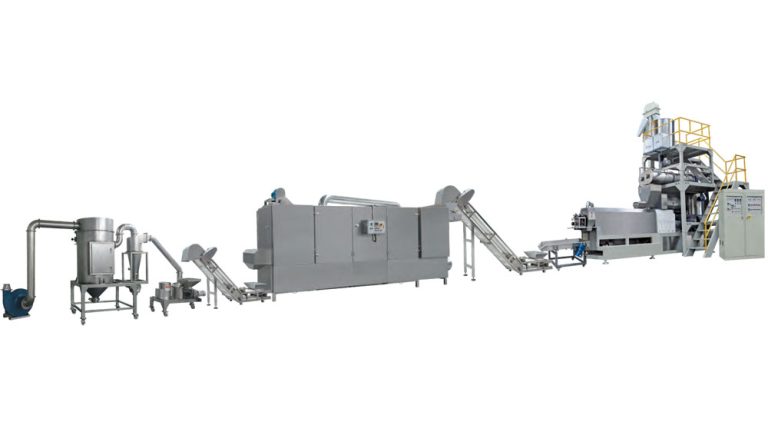
Modern industrial processors are rapidly transitioning to continuous reactive twin-screw extrusion technology. By utilizing the extruder as a high-pressure thermochemical reactor, companies can execute physical gelatinization and chemical cross-linking in a single, continuous, 30-second dry/semi-dry process—achieving zero wastewater discharge, cutting thermal energy consumption by over 40%, and reducing factory floor footprint by 80%.
Key Takeaways / TL;DR
- Zero Wastewater Discharge: Continuous reactive extrusion processes raw native starches at low moisture (15%–25%), completely eliminating the massive chemical liquid effluent, filtration, and washing stages of traditional wet batch tanks.
- 40% Thermal Energy Savings: By applying targeted Specific Mechanical Energy (SME) and high-precision PID barrel heating directly to the localized starch melt, thermal drying requirements are drastically reduced compared to evaporating tons of slurry water.
- API Spec 13A Quality Compliance: High-torque twin-screw extrusion achieves uniform molecular chain cleavage and chemical cross-linking (≥90%–95% gelatinization degree), yielding drilling mud starches capable of withstanding extreme bottom-hole temperatures (160°C–180°C).
1. Thermodynamic Reaction Kinetics: How Reactive Extrusion Works
In traditional wet tank modification, native starch granules are suspended in large volumes of water (often 10 to 15 tons of water per ton of starch) to facilitate mixing with liquid reagents. This low-density slurry requires hours of constant agitation and heating, followed by neutralization, centrifugation, and flash-drying.
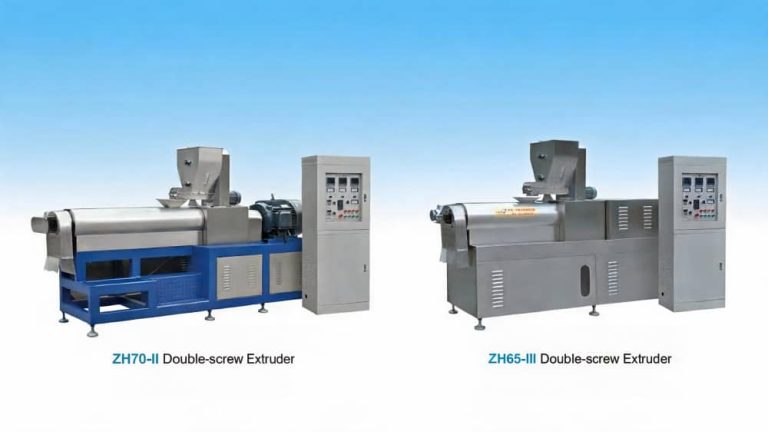
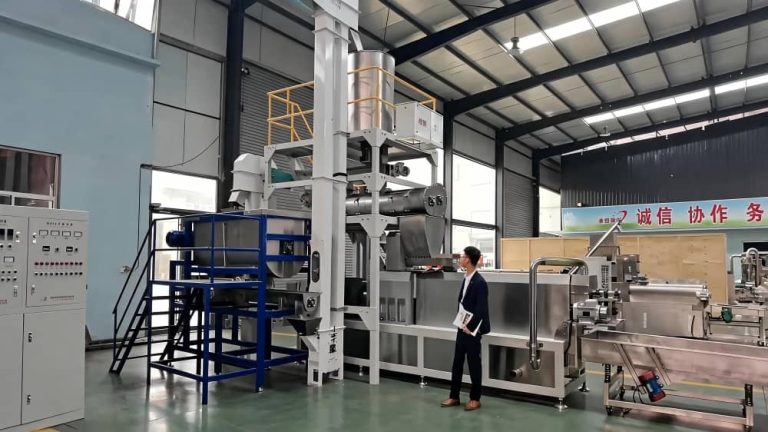
Inside Zhuoheng’s high-torque co-rotating twin-screw extruders (such as the heavy-duty ZH85 and ZH95 industrial platforms), the extruder barrel operates as an intensified continuous chemical reactor:
- Instantaneous Thermomechanical Melting: High L/D ratios (up to 44:1) and modular screw configurations subject native corn, tapioca, potato, or cassava starch to intense shear stress and controlled thermal energy, melting the crystalline starch granules within seconds.
- In-Barrel Reagent Injection: Liquid modifying agents or cross-linking catalysts are metered directly into high-pressure barrel zones via precision liquid dosing pumps. Intense distributive mixing achieves homogenous chemical substitution at the molecular level.
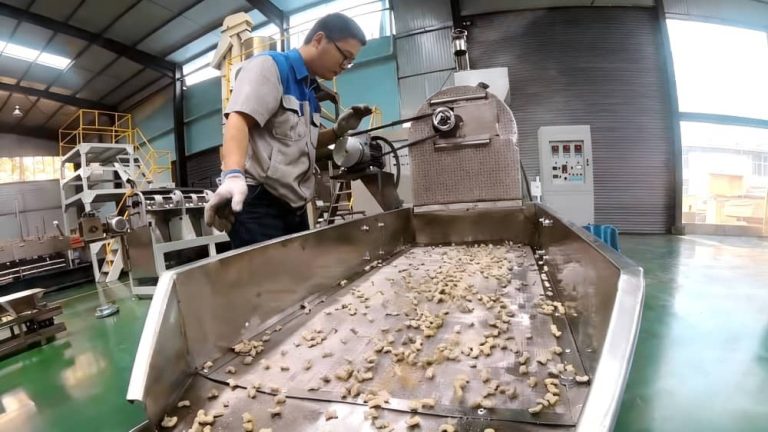
- Low-Moisture Discharge: The modified starch exits the die face as damp, reacted flakes at only 15%–20% moisture, passing directly to a continuous belt dryer without generating a single drop of liquid chemical wastewater.
2. Concrete Hardcore Benchmark: Batch Tank Farms vs. Zhuoheng Reactive Extrusion
The following technical matrix benchmarks a traditional 1 Ton/Hour Wet Chemical Batch Tank Facility against a Zhuoheng 1 Ton/Hour Turnkey Continuous Reactive Extrusion Line.
| Processing & Environmental Metric | Traditional Wet Batch Tank Farm | Zhuoheng Continuous Reactive Extrusion Line |
|---|---|---|
| Reaction & Processing Time | 12 – 24 Hours (Intermittent Batches) | 30 – 60 Seconds (Continuous 24/7 Flow) |
| Wastewater Effluent Generation | 10 – 15 Tons of Toxic Effluent / Ton Starch | 0 Tons (100% Dry/Semi-Dry Process) |
| Average Energy Consumption | ~180 – 250 kWh / Ton (High Evaporation Loss) | ~110 kWh / Ton (40%+ Energy Reduction) |
| Required Facility Footprint | ~1,500 – 2,500 m² (Tanks, Basins, Dryers) | ~200 – 300 m² (Compact Extrusion Layout) |
| Starch Gelatinization / Substitution | 80% – 88% (Batch-to-batch variation) | ≥ 90% – 95% (Uniform SME Shear Control) |
| Oilfield API Spec 13A Compliance | Requires complex chemical washing | Direct Compliance (160°C–180°C Thermal Stability) |
3. Metallurgical Resilience: Corrosion & Wear Resistance for Acidic/Alkaline Reagents
Chemical starch modification often introduces harsh reagents (such as chloroacetic acid, sodium hydroxide, or esterification catalysts) that rapidly corrode standard carbon steel or basic stainless alloys under high extrusion temperatures.
Zhuoheng ensures long-term operational reliability through specialized material metallurgy:
- 38CrMoAl Nitrided Alloy Steel: Screw elements and barrel sleeves are forged from high-grade 38CrMoAl alloy treated with deep plasma nitriding (surface hardness ≥ HV850–1100, case depth 0.5–0.8mm), providing exceptional resistance against mechanical abrasion.
- Optional Bimetallic Barrel Liners: For highly corrosive formulations (such as acidic carboxymethyl starch / CMS production), Zhuoheng integrates nickel-based bimetallic barrel bushings, extending screw and barrel service life to over 300 days of continuous high-load operation.
Frequently Asked Questions (FAQ) About Reactive Extrusion
1. How does continuous reactive extrusion achieve Zero Wastewater Discharge?
In traditional wet modification, native starch is mixed with water at a 1:3 ratio to form a liquid slurry, which must be washed and filtered after reaction. In Zhuoheng’s reactive extrusion process, native starch is fed into the extruder at its natural storage moisture (12%–14%) with only minimal liquid chemical injection. The reaction occurs entirely within the pressurized, molten starch matrix, leaving no free water to drain or wash away.
2. Does extruded modified starch meet API Spec 13A standards for oil drilling muds?
Yes. By optimizing the Specific Mechanical Energy (SME) inputs and introducing chemical cross-linking agents during the twin-screw reactive extrusion process, our lines produce high-quality cross-linked starch that can withstand extreme bottom-hole temperatures up to 160°C–180°C in high-pressure, high-salinity (HPHT) environments. The finished product strictly complies with API Spec 13A Section 10 standards for water-based drilling mud fluid loss control.
3. Can one extrusion line produce both industrial drilling starch and food-grade pre-gelatinized starch?
Yes. Zhuoheng turnkey extrusion lines feature modular screw profiles and segmented barrel zones. By adjusting the screw configuration (varying the ratio of transport elements and high-shear kneading blocks) and updating the PLC temperature profile, operators can easily switch production from industrial API oilfield starch to food-grade pre-gelatinized starch used as bakery thickeners, instant sauce binders, and baby cereal bases.
Upgrade Your Starch Plant for Eco-Friendly Profitability
Eliminating chemical wastewater, cutting energy costs by 40%, and modernizing your starch manufacturing process is easy with Zhuoheng’s turnkey reactive extrusion technology. Contact our chemical and food engineering team today to receive a customized CAD plant layout, process flow diagram, and factory-direct quotation.